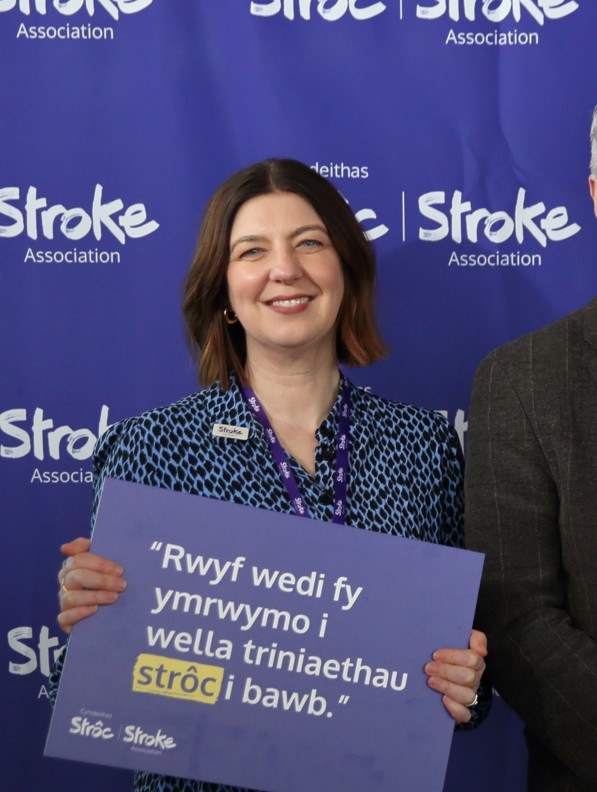
As part of our Stroke Visionaries interview series, we had the pleasure of speaking with Katie Chappelle.
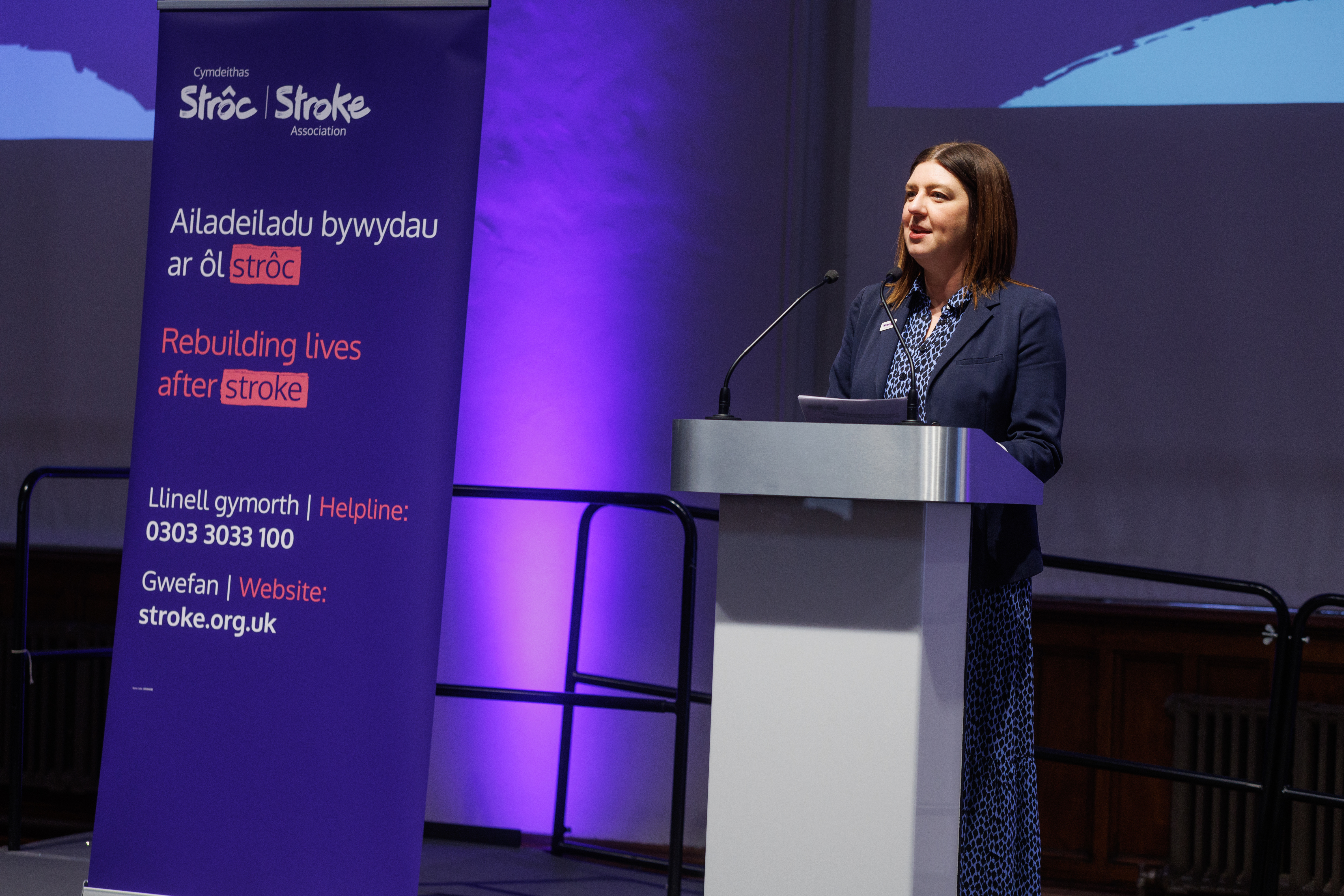
Katie Chappelle is the Director for Wales at the Stroke Association, the UK's leading stroke charity. With a strong personal commitment to health equity, Katie leads the Stroke Association's work across Wales, championing co-production with stroke survivors and carers, advocating for improved stroke services at a national level, and working to ensure that people from seldom-heard communities are at the heart of how care is designed and delivered. As the Senedd election approaches, Katie is calling on all political parties to prioritize stroke as part of their health agendas, and is currently working with the NHS in Wales and the Welsh Government to co-produce new Life After Stroke Standards.
The Stroke Association's Mission
Thanks for joining us today Katie. You’ve spoken about the need to not "exacerbate health inequalities by ignoring the impacts of poverty." What was it about the Stroke Association’s mission that first drew you to this work?
I was drawn to the Stroke Association by the uncomfortable reality that stroke doesn’t affect everyone equally, and too often, that inequality is ignored.
Evidence shows that people living in more deprived communities are more likely to have a stroke, more likely to have one at a younger age, and more likely to be left disabled as a result. Socioeconomic factors shape recovery too. Stroke survivors with lower incomes or lower levels of education are more likely to experience poorer outcomes and live with long-term disability.
We also know that stroke disproportionately affects people from Black African and Caribbean communities and South Asian families, yet these same communities are often the hardest for charities and health services to reach. That isn’t because people don’t want support, but because the system hasn’t been designed with them in mind.
This challenge was clearly highlighted in Healthcare Inspectorate Wales’s National Review of Patient Flow and it affects the whole health and social care system, not just one organization. But equity is a strong personal value of mine, and it’s something I’m committed to changing.
The Stroke Association’s vision: that more people find strength through support, continues to resonate with me. Tackling the devastation of stroke means doing better: hearing from seldom-heard voices, putting real lived experience at the heart of our work, and making sure our services don’t reinforce inequality but actively challenge it.
With the Welsh election having just passed - there is a real opportunity for change. What is the single biggest "unmet need" or opportunity in Wales right now that policy-makers need to wake up to?
Stroke care in Wales is the single biggest unmet health opportunity we are failing to act on.
This year, around 7,000 people will have a stroke in Wales and this number is rising. Stroke is already one of the leading causes of death and disability, yet despite this, care has been getting worse. According to Healthcare Inspectorate Wales, the quality of stroke treatment and care has been declining since 2019.
The consequences are serious. If you have a stroke in Wales, you are more likely to have a poorer outcome than someone elsewhere in the UK. Wales is ranked 21st out of 26 high‑income countries for stroke recovery, while England sits at 12th. That means people here are more likely to die earlier or live with life‑changing disabilities.
The longer we delay meaningful action, the further Wales will fall behind.
The Senedd election is a real moment for change. The Stroke Association is urging all political parties to make stroke a priority, as a key element of their health plans.
We are calling for a transformation of stroke services, from rapid emergency response to high‑quality acute hospital care, effective rehabilitation, and long‑term community support. Without strong leadership, dedicated funding, and a clear, national plan, improvements will stall. And when that happens, it’s survivors who pay the price.
Improving stroke care doesn’t just help stroke survivors, it strengthens the entire health system, from prevention through to recovery. Any party serious about transforming health in Wales should put stroke at the top of their agenda.
Co-Production Matters
You & the Stroke Association are advocates for co-production, ensuring survivors' voices are at the heart of the conversation. How does bringing that lived experience into the room change the way we design stroke services?
Co-production shifts the conversation from what we think people need to what actually matters to them.
Too often, services are designed around clinical expertise alone. While that expertise is vital, plans made without stroke survivors or carers in the room can lead to assumptions. By bringing lived experience into the heart of decision‑making, we gain insight you can’t get from data alone. This is especially powerful when we focus on people who are rarely heard: those living in deprivation, people from ethnically diverse communities, or those who have struggled to navigate the system.
At the Stroke Association, we don’t just talk about co‑production, we practice it. Our stroke manifesto was shaped over a year of meaningful engagement with people affected by stroke alongside professionals, to ensure it reflects real priorities and real-world challenges.
Another example I’m particularly proud of is our collaboration with the mental health charity Mind. From research through to testing and prioritization, people with lived experience led the service design at every stage. This resulted in solutions that feel relevant, practical, and genuinely supportive.
I’m also excited that we’re now working with the NHS in Wales and the Welsh Government to co‑produce new Life After Stroke Standards. These will be shaped with stroke survivors and carers, ensuring they are evidence‑based but also person‑centered, reflecting what truly matters to people living with the physical, communication, cognitive, and psychological impacts of stroke.
With it being Stroke Awareness Month - if you could fast-forward five years, what is your "visionary" hope for stroke care in Wales? What does a truly equitable system look like to you?
I want stroke care in Wales to turn a corner - and start moving in the right direction. In five years I want to see stroke outcomes in Wales at least on a par with England. There is no reason we should be accepting poorer outcomes as inevitable.
By then, I want the Life After Stroke Standards to be fully embedded, standards that are genuinely shaped by the diversity of stroke experiences across Wales and that drive equitable care. I want to see health and care professionals using them daily, feeling confident and proud that the care they deliver truly makes a difference.
A truly equitable system is one where your background, the area in which you live or your income doesn’t determine your chances of recovery. Where support doesn’t stop at hospital discharge, and where people feel seen, heard, and supported for as long as they need it.
Stroke Awareness Month takes place every May to raise awareness of the devastating impact of stroke. It also highlights the importance of providing vital support for stroke survivors and those who care for them. This year, we're asking people to Make May Purple, so we can support more people affected by stroke. You can find out more at https://www.stroke.org.uk/stroke-awareness-month
Advice For the Next Generation
The Stroke Visionaries series aims to inspire the next generation. What is one piece of advice you would give to people early in their careers looking to go into the world of advocacy work/stroke care.
Put lived experience at the center of everything you do.
Working for a charity like the Stroke Association is incredibly rewarding, I genuinely feel passionate about my work. But if there’s one lesson I’ve learned, it’s that data alone is never enough. Statistics tell us what is happening, but people’s stories tell us why it matters.
When you hear directly from stroke survivors and carers about their challenges, their resilience and their frustrations, it brings the issue to life in a way nothing else can. Whether it’s in the Senedd, the media, or meetings with decision‑makers, those voices are powerful, and they change conversations.
If you want to create real change, listen first. Let lived experience guide your work. Everything else should follow from there.
If you or someone you know is driving change in stroke care, we’d love to hear from you. Please send an email with your nomination to Emma Houtz at ehoutz@brainomix.com.
Stay tuned for more editions of Stroke Visionaries.