



Brain
Implementation of an AI-supported decision-making tool in a high-volume stroke system with routine perfusion imaging
Introduction
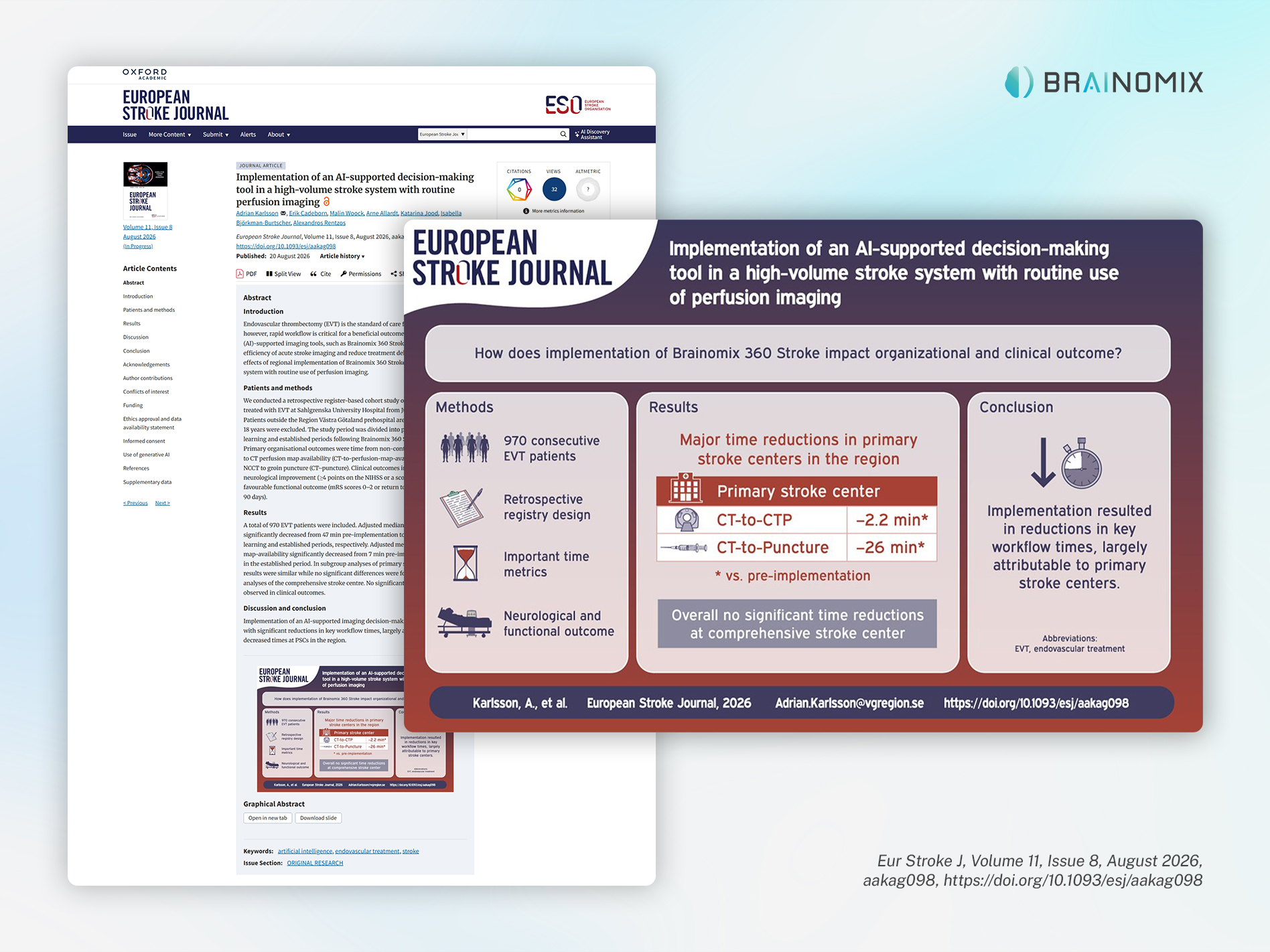
Endovascular thrombectomy (EVT) is the standard of care for LVO stroke; however, rapid workflow is critical for a beneficial outcome. Artificial intelligence (AI)-supported imaging tools, such as Brainomix 360 Stroke, may improve the efficiency of acute stroke imaging and reduce treatment delays. We evaluated the effects of regional implementation of Brainomix 360 Stroke in a high-volume system with routine use of perfusion imaging.
Patients and methods
We conducted a retrospective register-based cohort study of consecutive patients treated with EVT at Sahlgrenska University Hospital from June 2021 to May 2024. Patients outside the Region Västra Götaland prehospital area or aged under 18 years were excluded. The study period was divided into pre-implementation, learning and established periods following Brainomix 360 Stroke introduction. Primary organisational outcomes were time from non-contrast brain CT (NCCT) to CT perfusion map availability (CT-to-perfusion-map-availability) and from NCCT to groin puncture (CT–puncture). Clinical outcomes included early neurological improvement (≥4 points on the NIHSS or a score of 0–1 at 24 h) and favourable functional outcome (mRS scores 0–2 or return to pre-stroke mRS at 90 days).
Results
A total of 970 EVT patients were included. Adjusted median CT–puncture significantly decreased from 47 min pre-implementation to 36 and 35 min in the learning and established periods, respectively. Adjusted median CT-to-perfusion-map-availability significantly decreased from 7 min pre-implementation to 6 min in the established period. In subgroup analyses of primary stroke centres (PSCs), results were similar while no significant differences were found in subgroup analyses of the comprehensive stroke centre. No significant differences were observed in clinical outcomes.
Discussion and conclusion
Implementation of an AI-supported imaging decision-making tool was associated with significant reductions in key workflow times, largely attributable to decreased times at PSCs in the region.

Brainomix Limited is a company registered in England and Wales at OX2 0JJ. Company Registration No. 07426406


Brainomix © 2026. All rights reserved